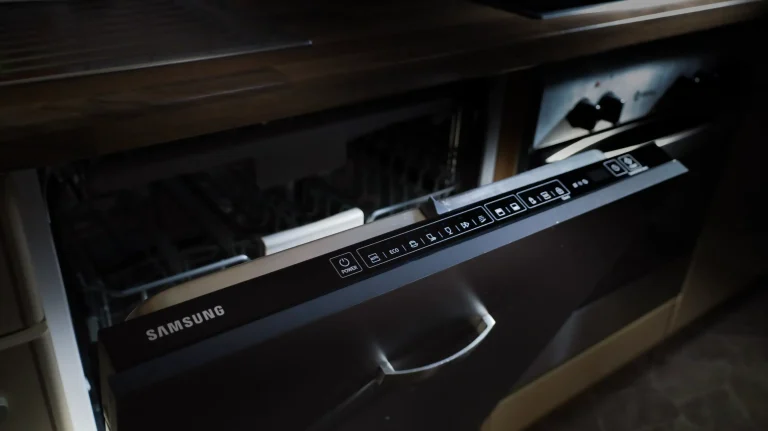
Your dishwasher cleans your plates every day. But when glasses come out cloudy or the machine smells sour, it’s fair to wonder who cleans the dishwasher. The answer is less complicated than most cleaning videos make it look.
Start with the filter, door seals and visible debris, then run the cleaning cycle approved for your model. Those steps address common causes of poor performance without relying on an improvised chemical mixture. Here’s a practical routine, including what to do about grease, white mineral deposits and lingering smells.
Before you start: check your dishwasher manual
Not every dishwasher has a removable filter, the same cycle names or the same cleaning-agent rules. Find your model number on the door edge and check its use-and-care guide. This matters especially before you add vinegar, citric acid or a commercial cleaner.
Gather a soft cloth, a small soft-bristled brush, warm water, a little dish soap and the cleaning product your manufacturer recommends. Unload the dishwasher and let the interior cool before reaching into the bottom of the tub.
How to clean a dishwasher in six steps
1. Remove food scraps and inspect the bottom
Pull out the lower rack. Look around the sump area for labels, seeds, glass fragments or other loose debris. Remove visible scraps carefully. Don’t reach into hidden openings or force a cover off; some parts are not intended for owner removal.
2. Clean the filter, if your model has a removable one
The filter is often at the bottom of the tub. Follow the manufacturer’s removal instructions, then rinse it with warm water. Use a soft brush and mild dish soap on stuck-on residue.
Bosch and
Whirlpool both recommend gentle brushing rather than abrasive tools. Reinstall and lock the filter correctly before operating the appliance.
If your dishwasher has a self-cleaning or non-removable filter, do not pry it out. Follow the maintenance directions for that design.
3. Wipe the door edges, gasket and detergent area
Food and detergent residue can collect around the door, where the main wash spray may not reach. Wipe the seal, door edge, detergent compartment and accessible crevices with a soft damp cloth. Avoid harsh scrubbers, sharp tools or cleaners that could damage seals and finishes.
4. Inspect the spray arms
Look for visible food particles in the spray-arm holes. If your manual explains how to remove the arms, follow those instructions and rinse away debris. Do not force a clogged nozzle with a metal pick or dismantle parts your manual does not identify as user-serviceable.
5. Run a manufacturer-approved cleaning cycle
For routine cleaning, a dishwasher cleaning product or the machine’s cleaning program is often the most straightforward choice. Follow both the cleaner’s label and the dishwasher manufacturer’s guidance, including whether the machine must be empty.
Whirlpool also documents a vinegar method for some machines: a cup of white vinegar in a dishwasher-safe container on the lower rack, followed by a wash cycle with no detergent. Its instructions specify the exact amount and cycle;
do not copy a vinegar recipe from another brand without checking your own manual. Whirlpool cautions that frequent acid use may harm the appliance.
GE Appliances also provides model-specific options involving a dishwasher cleaner, vinegar or citric acid.
Don’t put bleach, vinegar and other cleaning chemicals together. Never combine household cleaners unless the manufacturer explicitly instructs you to do so.
6. Finish with the exterior and a quick inspection
Wipe the controls and handle with a suitable soft cloth. Use the finish-specific cleaner your manual recommends for stainless steel, and avoid abrasive pads. After the cleaning cycle, look for standing water, loose debris or anything that still smells unusual.
Which cleaning method fits your problem?
| What you notice |
Start here |
| Food bits on clean plates |
Check the filter, spray arms and loading arrangement |
| Sour or musty odor |
Remove trapped food, clean seals and filter, then run an approved cleaning cycle |
| White film or mineral deposits |
Check water hardness and use the descaling method approved for your model |
| Greasy residue inside |
Wipe accessible buildup and follow the dishwasher-cleaner directions |
| Water remains after the cycle |
Review filter and drain instructions; a cleaning cycle alone may not solve a drain fault |
These symptoms can overlap. For example, mineral deposits and detergent residue can both make glassware look cloudy. If a problem continues after ordinary cleaning, check your appliance’s troubleshooting guide instead of repeating stronger chemical treatments.
Can you clean a dishwasher with vinegar and baking soda?
Sometimes, but it depends on the manufacturer. Whirlpool provides instructions for using vinegar and baking soda in
separate cycles. That isn’t a universal recommendation for all brands. Vinegar is acidic, so repeated or unsuitable use may damage certain components. Baking soda is not a substitute for clearing a blocked filter or diagnosing a drainage problem.
For a new-to-you dishwasher, look up its manual first. If the manufacturer recommends a dedicated machine cleaner or descale program, use that method. Never mix vinegar with bleach or chlorine-containing products.
How often should you clean your dishwasher?
Check for visible debris after a load, and wipe obvious spills as they happen. A deeper cleaning interval depends on usage, hard-water buildup and your model’s instructions. Whirlpool suggests regular interior maintenance, while its filter-cleaning schedule varies substantially with how often dishes are scraped or rinsed before loading. Bosch recommends cleaning certain filters every few months.
Rather than treating every machine as identical, make a small recurring habit: inspect the filter when dishes feel gritty or odors appear, and follow the maintenance schedule specified by your manufacturer.
Why does my dishwasher smell even after cleaning?
If an odor remains, double-check the filter and the debris area near the drain, then inspect the gasket and any accessible folds. Our
dishwasher odor troubleshooting guide helps distinguish food residue from drainage problems. Dirty standing water can also indicate a drainage or installation issue, not merely a need for another cleaning tablet. If the machine is not draining properly, consult its troubleshooting guide or a qualified appliance technician.
Frequently asked questions
Should I run an empty dishwasher to clean it?
Many dishwasher cleaning products and machine-cleaning programs call for an empty dishwasher. Use the cycle and loading instructions on your machine and cleaner rather than assuming every product works the same way.
Can I put vinegar directly in the bottom of the dishwasher?
Follow your model’s directions. Whirlpool specifies vinegar in an upright dishwasher-safe measuring cup for its method; other manufacturers may specify different procedures or discourage vinegar.
How do I know whether my dishwasher filter is clogged?
Common clues include visible food scraps, gritty dishes, poorer washing results and unpleasant odors. Check the filter for debris and clean it as directed in your manual. Persistent drainage issues may have another cause.
Should I use bleach to clean my dishwasher?
Do not introduce bleach unless your dishwasher manufacturer expressly permits it. Bleach can damage some components and may react dangerously with other cleaning products, especially acids.
The bottom line
If your dishwasher smells, leaves grit or develops a film, start with simple maintenance: remove debris, clean its filter if removable, wipe the seals and use an approved cleaning cycle. Different brands recommend different products and schedules, so the owner’s manual remains your best reference. The goal is cleaner dishes and fewer recurring problems, not the strongest possible chemical treatment.
Sources and further reading

 by