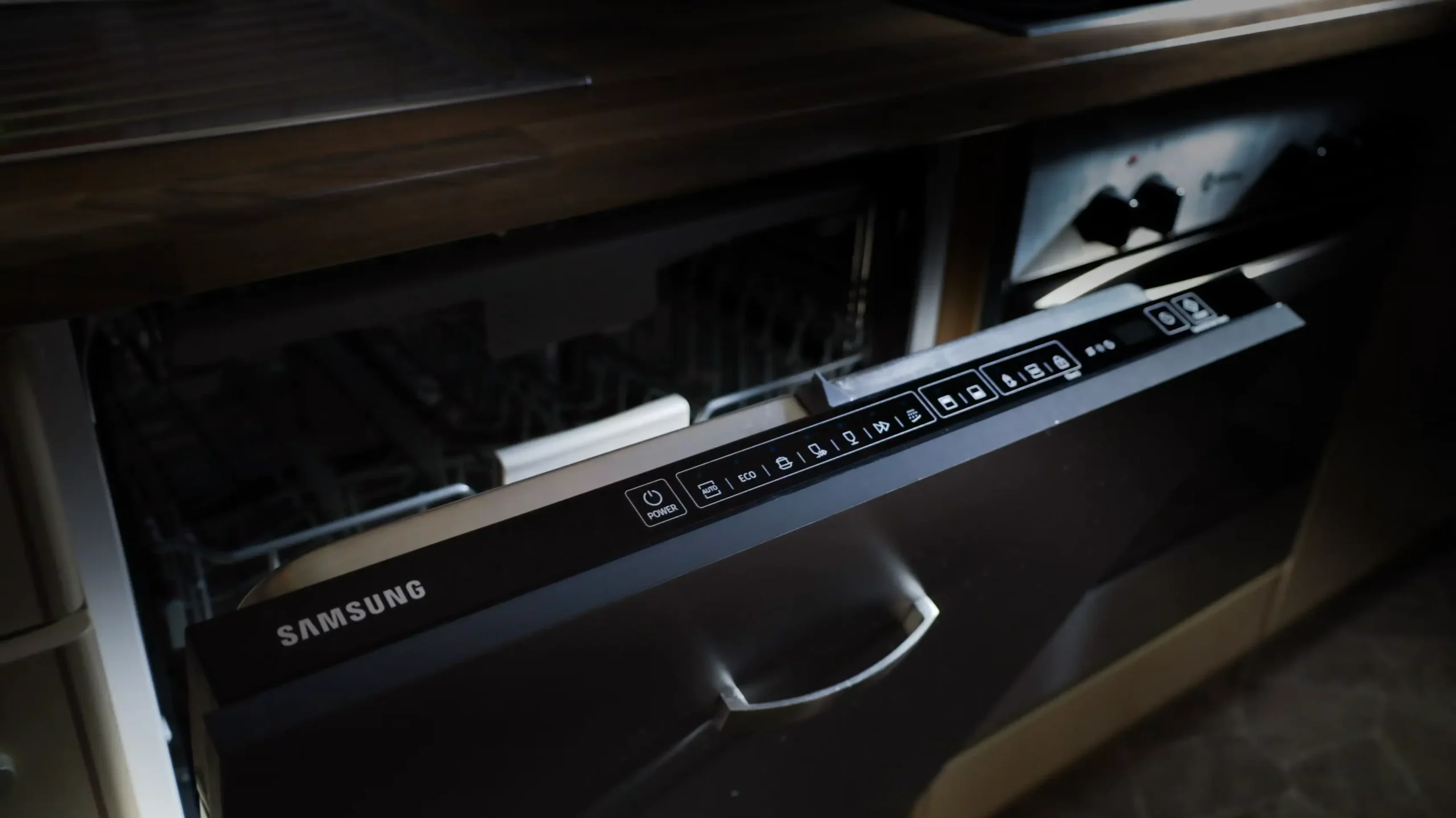
You open the dishwasher expecting clean dishes, but instead get a sour smell. Sometimes it’s like old food; sometimes it reminds you of a drain. A freshener might hide it for a day, but that doesn’t tell you where the smell came from.
Start with the filter and the bottom of the tub. Trapped food and grease are common causes. If the smell keeps returning after cleaning, investigate standing water, the door seal and the drain connection. These are different problems, and they need different fixes.
What does the smell tell you?
| Smell |
Possible cause |
First thing to check |
| Sour or like old food |
Food trapped in the filter or tub |
Filter, bottom screen and visible debris |
| Musty or damp |
Residue around the gasket or inside the tub |
Door edges and folds of the seal |
| Sewage or dirty water |
Water not draining or flowing backward |
Standing water, sink drain and hose installation |
| Burning or hot plastic |
A fallen plastic item or appliance fault |
Stop use and follow the manufacturer’s safety guidance |
| Mild new-plastic smell |
New appliance materials |
Manual and first-use instructions |
Smell alone isn’t a diagnosis. But it helps you choose what to inspect instead of blindly running another cleaning cycle.
1. Check the filter before adding cleaner
Pull out the bottom rack once the dishwasher has cooled. On many models, you’ll find a removable filter beneath it. Bits of rice, vegetable skins, sticky labels and grease can collect there even when the dishes look clean.
Remove the filter only as your manual directs. Rinse it under warm running water, using a soft brush for stubborn residue. Reassemble and lock it correctly. Some machines have different filtration systems, so don’t pry out a part that isn’t designed for removal.
Bosch’s dishwasher odor guidance identifies clogged filters as a common reason for unpleasant smells and poor washing performance.
2. Wipe the door seal and hidden edges
The spray doesn’t necessarily reach every fold of the rubber gasket. Wipe accessible door edges, seals and the detergent area with a soft damp cloth. If your manual permits it, a little mild soap can help lift greasy residue. Avoid sharp tools and abrasive scrubbers that could damage the seal.
Check the tub floor for scraps and inspect the spray arms for visible debris. Don’t dismantle covers or pump parts that your manual doesn’t identify as user-serviceable.
3. Find out if dirty water is coming back
If the dishwasher smells like a drain, look for water collecting after the cycle or returning while the machine sits unused.
GE Appliances says this can happen when a drain hose lacks the high loop or air-gap arrangement required for the installation.
A little water around the filter is not always abnormal. Whirlpool notes that some models intentionally retain a small amount there to help protect seals. But dirty water building up, a sink that also drains poorly or a recurring sewage-like odor deserves closer attention.
Check the installation instructions for your exact model. If the hose connection, backflow or plumbing may be involved, seek qualified help. Don’t pour household drain cleaner into the dishwasher; GE advises against it.
4. Run the cleaning cycle your machine actually recommends
After removing visible debris, use the dishwasher’s cleaning program or a cleaner approved by its manufacturer. This may clear grease and deposits from areas you can’t reach with a cloth.
What about vinegar? Some Whirlpool instructions describe a vinegar rinse, but that isn’t universal advice for every brand and model. Frequent or unsuitable use of acids may damage some components. Follow the manual rather than mixing your own cleaning recipe. Never combine vinegar, bleach or other household cleaners.
For the full maintenance routine, read our
step-by-step dishwasher cleaning guide. That article covers filter care, cleaning cycles and hard-water residue. Here, we’re looking specifically for the cause of a persistent odor.
5. Consider how long dirty dishes sit inside
If you don’t run the machine every day, scraps on dirty plates can begin to smell. Scrape off larger food pieces before loading. Whirlpool suggests using a rinse program for partial loads on some machines rather than leaving dirty dishes shut inside for days.
When the cycle is complete, unload or follow the appliance’s drying guidance. Don’t leave scraps sitting in the filter or damp food residue trapped in the door seal.
Why does it smell even after a wash?
A fresh cleaning cycle may not solve a drain problem. Pay attention to when the smell is strongest. Is it immediately after washing, the next morning, or only when the kitchen sink has been used? Does the tub contain new dirty water between cycles? These details can point to a drainage issue instead of leftover food.
If the smell remains after cleaning the filter and seals, checking the accessible drain area and using an approved cleaning program, look up your model’s troubleshooting guide or consult a technician.
When to stop using the dishwasher
A burning electrical smell, smoke, sparking or melting plastic is different from stale food. Stop using the appliance, let it cool and follow the manufacturer’s safety guidance. Have a qualified technician inspect it if the cause isn’t obvious and safely removable.
Also stop and investigate recurring leaks, dirty water backing into the tub or complete failure to drain. Stronger cleaning chemicals won’t repair a plumbing problem.
Frequently asked questions
Why does my dishwasher smell like rotten eggs?
A sulfur-like smell may accompany stagnant dirty water or a drainage issue, but the smell alone cannot confirm the cause. Check the filter and visible standing water. If it persists, particularly when sink drainage is poor, consult a qualified professional.
Why does an empty dishwasher still smell?
Food residue and grease can remain in the filter, gasket and drainage area after the dishes are removed. Empty doesn’t mean clean.
Will baking soda remove the smell?
It may reduce some odors, but it can’t unblock a filter or fix water backflow. Use cleaning products and cycles approved for your appliance.
Is a new dishwasher supposed to smell?
GE says some new-appliance odors can fade after normal use. Smoke or a strong burning smell is different and should be investigated rather than ignored.
How often should I wash the filter?
Follow the schedule in the owner’s manual. Clean it sooner if you notice visible debris, gritty dishes, poorer performance or odors. Not every dishwasher has a removable filter.
The bottom line
Start with what you can see: food scraps, the filter and the door seal. Then use the cleaning method recommended for your dishwasher. If dirty water keeps returning or the smell persists, investigate the drain instead of repeating household cleaning hacks.
Sources and further reading

 by